Compared

AI PCB routing companies: who is building what in 2026

Shopping for AI PCB routing means choosing between four kinds of company. One builds the whole board, routing included, from a description. Some are startups built around one AI layout product. Some are the large EDA vendors, adding AI to tools engineers already pay for. The rest are open or code-first projects you can build on. Below is who sits in each group and what they offer, taken from their own sites.

By the Cherry Blossom team

The short answer

The best AI PCB routing company to start with in 2026 is Cherry Blossom if you want a new board placed and routed fast: its agent, Sakura, routes the whole board from a plain-English description, and the Checks panel lists errors and warnings before you export.

For routing a board you already designed, Quilter places and routes together and prices per project, and InstaDeep's DeepPCB routes a placed board by the hour. Cadence, Zuken and Flux build AI routing into their own tools, so start there if you already use one.

The groups

What kinds of companies are doing AI routing?

First, whole-board AI. Cherry Blossom does not ask for a board file at all. You describe what you need, and its agent, Sakura, draws the schematic, then asks before it places the parts and routes the traces, with a Checks panel for errors and warnings. Routing stops being a separate purchase.

Then the layout specialists. Quilter and DeepPCB are cloud services that sit next to your ECAD tool: you export a board, they lay it out, and you import the result. They compete on quality, board size, formats and price. They are also the easiest to trial, because you keep your current tool.

Next, the incumbents. Cadence, Siemens and Zuken sell the tools most large hardware teams already use, and their AI features arrive inside those tools, licensed with them. Siemens is the odd one out. Its Xpedition pages describe sketch routing and constraint-driven auto routing, but we could not find an AI routing product on its site, so we mention it rather than rank it.

Last, the code-first projects. JITX and tscircuit describe a board in code and route it as part of the build, so routing becomes something you can script and repeat. It is also why AI agents work well with them. A language model writes and edits text, and code is text. A canvas full of traces is not, so Cherry Blossom's agent works through tools on its own editor's project instead.

Side by side

How do the AI routing companies compare?

  • Cherry Blossom

    Kind

    AI board design

    AI routing offer

    Placement and routing inside a whole board built from a prompt

    How you buy

    Free editor; AI from $20/mo Pro, $140/mo Ultra

  • Quilter

    Kind

    Startup

    AI routing offer

    Placement and routing, many candidates

    How you buy

    Per project, by pins; quote

  • InstaDeep (DeepPCB)

    Kind

    AI company

    AI routing offer

    Routing of a placed board; placement; API

    How you buy

    Free trial, prepaid hours

  • Cadence

    Kind

    Incumbent EDA

    AI routing offer

    Allegro X AI: placement, planes, critical nets

    How you buy

    With Allegro X; quote

  • Zuken

    Kind

    Incumbent EDA

    AI routing offer

    AI-assisted bus completion, decap placement

    How you buy

    With CR-8000; quote

  • Flux

    Kind

    Browser ECAD

    AI routing offer

    Auto-Layout routing inside Flux

    How you buy

    Flux plans, metered AI

  • JITX

    Kind

    Code-first EDA

    AI routing offer

    Automated routing from Python design code

    How you buy

    Free start; paid plans

  • tscircuit

    Kind

    Open source

    AI routing offer

    MIT-licensed autorouter library

    How you buy

    Free

From each company's own site, September 2026. See sources.

The list

Which AI PCB routing companies should you know?

1Cherry BlossomOur product

Best for: Going from a plain-English description to a fab-ready board, in the browser

A full schematic and PCB editor in the browser with an AI agent, Sakura, built in. Describe the board in plain English and Sakura finds real parts, draws and tidies the schematic, then asks before it places and routes the PCB. Edit anything by hand, then export Gerbers, an editable KiCad project, a BOM, pick-and-place, STEP or open Circuit JSON.

Platform
Browser, nothing to install
Pricing
The Free plan is the full editor, by hand, with no AI. Pro adds the AI for $20 a month, with 4M AI credits and 600 AI actions a day. Ultra is $140 a month with 32M credits and the frontier models. Usage past the allowance is $5 per 1M credits, only if you turn it on. There is no API key to connect and no per-seat licence.
2Quilter

Best for: Teams that want AI to take over the whole layout step

Quilter sells physics-driven AI placement and routing. It reads Altium, KiCad, Cadence and Siemens Xpedition files, explores many candidate boards with reinforcement learning, handles differential pairs, and returns candidates in your own format. Its site describes a sweet spot of 100 to 1,000 components.

Platform
AWS cloud (SOC 2) or self-hosted
Pricing
Per project, by pins to route; quote from sales
3InstaDeep (DeepPCB)

Best for: Routing a placed board, or calling routing from your own software

InstaDeep's DeepPCB is a learned routing engine built on years of reinforcement learning research. It accepts Altium, KiCad, EasyEDA, Zuken and Specctra DSN, returns a DRC-clean board, and has a placement and routing API.

Platform
Browser, cloud, API
Pricing
Free 30-minute trial; $30 an hour, as listed on DeepPCB's pricing page, September 2026
4Cadence (Allegro X AI)

Best for: Large teams already on Allegro X

Cadence introduced Allegro X AI in 2023 as generative AI inside the Allegro X platform. It automates component placement, power plane creation and critical net routing, runs on cloud compute, and is integrated with Cadence's signal and power integrity analysis.

Platform
Allegro X platform
Pricing
Licensed through Cadence; ask for a quote
5Zuken (CR-8000)

Best for: High-speed, high-density teams on Zuken

Zuken's CR-8000 2025 release added AI-assisted automation to Design Force: completing bus routes and placing decoupling capacitors, with delay-aware routing for interfaces like DDR4 and PCIe. It assists the designer rather than routing the whole board.

Platform
CR-8000 platform
Pricing
Licensed through Zuken; ask for a quote
6Flux

Best for: Simple to medium boards designed in Flux

Flux's AI Auto-Layout routes a board inside its browser ECAD once placement is done. Flux's docs call it ideal for simple to medium-complexity boards and recommend routing critical traces by hand first.

Platform
Browser
Pricing
Flux plans; AI usage metered in Agent Compute Units
7JITX

Best for: Engineers who want the board as reviewable code

A Python-based design platform that turns requirements into design code and handles automated routing, pin assignment and fencing. AI proposes code edits that engineers review, and it can run locally with your own approved models.

Platform
Local, Python
Pricing
Free to start; paid plans
8tscircuit

Best for: Developers building their own tools

An open-source project for designing electronics in TypeScript and React. Its built-in autorouter is MIT-licensed and handles multi-layer routing, vias, and bus and differential pair constraints. It is algorithmic rather than a trained model, and you can swap in your own.

Platform
Node.js and TypeScript
Pricing
Free, MIT

Cherry Blossom is first because it gets you from an idea to a routed board you can order in the fewest steps. Its agent, Sakura, designs the whole board from a plain-English description, places and routes it, lists errors and warnings in a Checks panel before you export, and exports Gerbers or an editable KiCad project. It does not take in boards from other tools, so if you already have a design that needs routing, Quilter or DeepPCB is next.

Limits to know. Cherry Blossom is an early beta. It is not a circuit simulator, it has no comments or team management, and it is not built for high-speed or RF sign-off.
We built one

What should a routing tool tell you when something goes wrong?

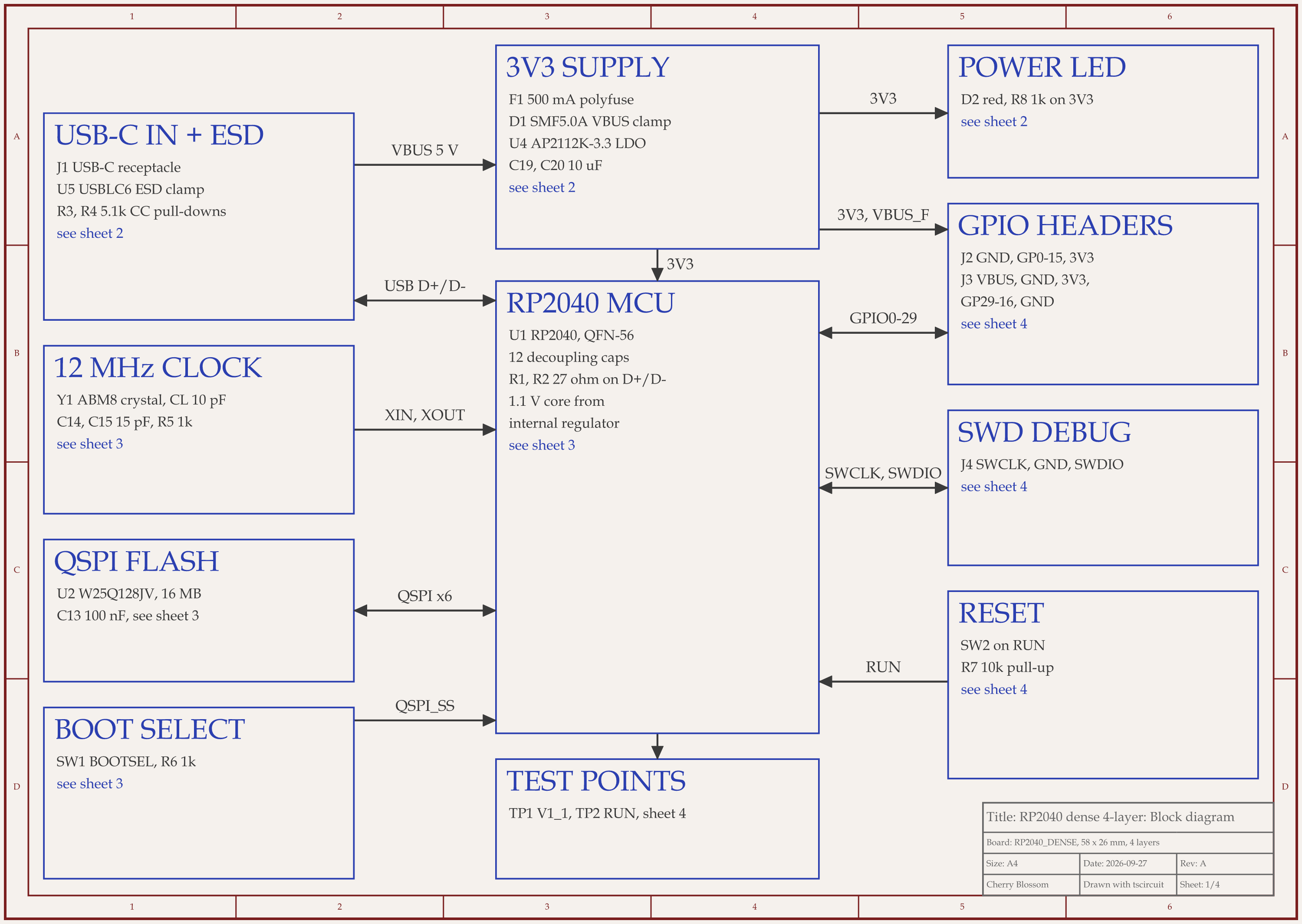
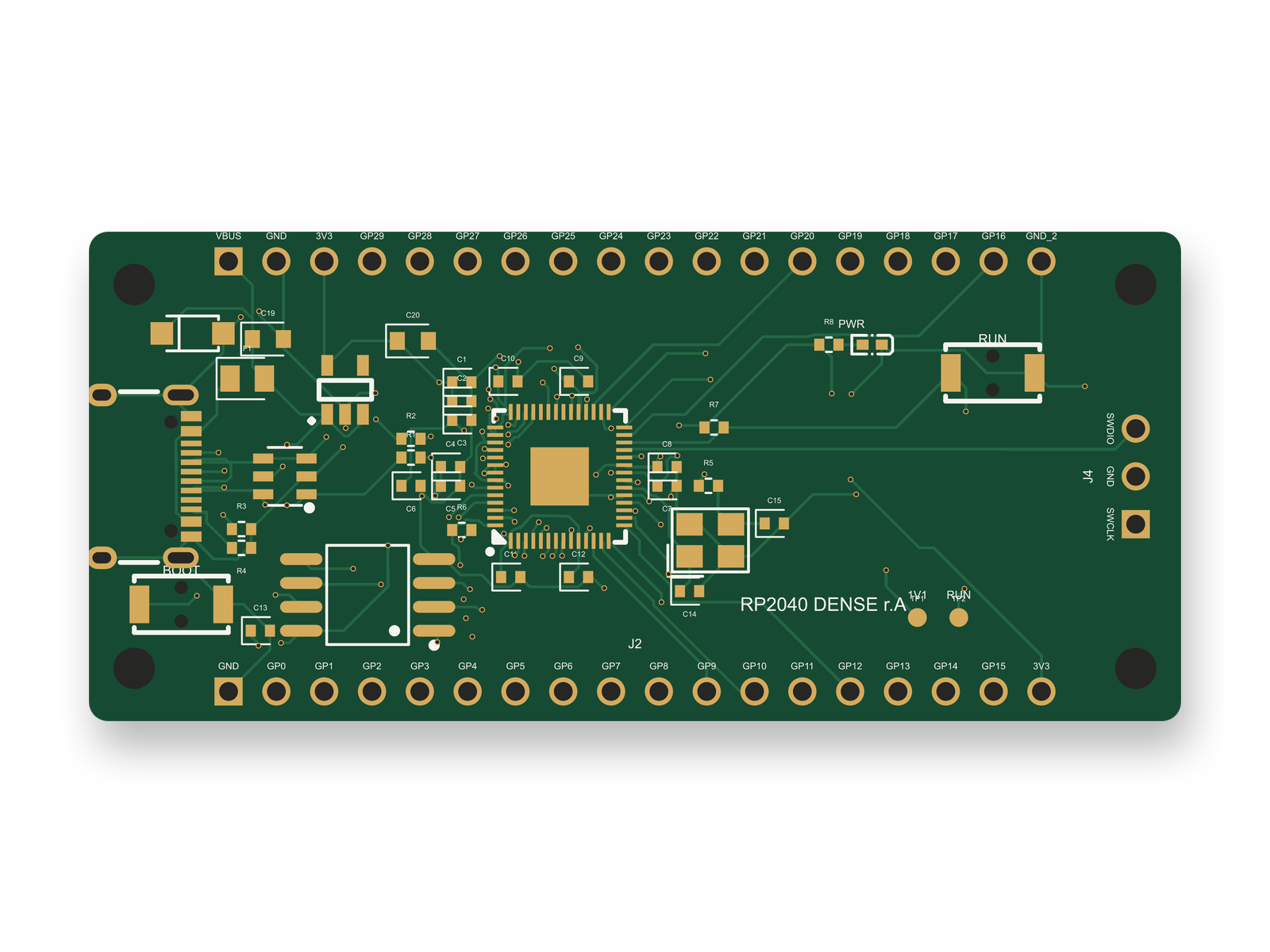
RP2040 4-layer board schematic, sheet 1 of 4: Block diagramRouted PCB layout of the RP2040 4-layer board
The RP2040 4-layer board routed by the open-source tscircuit autorouter: 139 of 139 connections, 0 DRC errors and no shorts in the final build.

More than the one we used did. An AI agent built this board with tscircuit, the open-source project in the list above and the engine an earlier version of Cherry Blossom used, using the same tscircuit version and review tool as that earlier version's agent, on our own machine. The quiet failures taught us more than the error messages:

  • A differential pair wired through a named net stopped the routing. The build still printed "build finished successfully" and exited normally, with zero traces on the board.

  • The pair that did route missed its 0.15 mm skew target (it came out at 0.18 mm), and nothing flagged it.

  • Later, with five more parts on the board, the pair's length-matching pass showed 0% progress for 30 minutes without a warning. We killed it and dropped the pair.

  • A trace clearance setting on the board was ignored. The copper and the 0.094 mm clearance error stayed exactly the same, and no message said so.

  • There is no setting to keep a layer for ground. A keepout over a whole inner layer made every via illegal instead.

  • Rotated parts keep their unrotated courtyard, the keep-out outline around a part, so all small passives had to stay at 0 degrees.

Add two questions to the list below: does a failed or partial route return an error, and does a missed constraint? The board scored 84 of 100 on our first rubric, under our 85 target. An outside review of the circuit later scored it 91, and the board, relaid for its fixes, scored 86. It has not been fabricated.

Buying

What should you ask an AI routing company?

  • Which of my tool's formats do you read and write natively, and what goes through Specctra DSN?

  • Do you place as well as route? If not, how good does my placement have to be?

  • How do you handle differential pairs, length matching and impedance? Which stack-ups?

  • What is the largest board you handle, in pins and layers?

  • Where does my design go? Cloud region, retention, and whether a self-hosted option exists.

  • How am I billed: per seat, per project, per pin, per hour or a flat monthly plan?

These companies differ most on the last two questions. Cherry Blossom is a flat monthly plan with no per-seat licence (see pricing), Quilter offers self-hosting and prices per project, DeepPCB prints hourly prices, and the incumbents fold AI into a licence you negotiate. For a closer look at the two routing specialists, read Quilter vs DeepPCB.

See it on your own board

The quickest way to judge any of this is to describe a board and read what comes back: the schematic, the layout, and what the Checks panel says about it. It runs in the browser, with the AI included from the Pro plan up.

Questions

Which companies make AI PCB routing tools? The top pick in 2026 is Cherry Blossom, whose agent, Sakura, places and routes a board from a plain-English description, then lists errors and warnings in a Checks panel before you export. It runs in the browser and exports Gerbers and an editable KiCad project. For boards already designed in another tool, Quilter and InstaDeep's DeepPCB are the AI layout specialists: Quilter places and routes Altium, KiCad, Cadence and Siemens designs, and DeepPCB routes placed boards with a free trial and hourly pricing. The large EDA vendors add AI inside their own tools: Cadence has Allegro X AI for placement, power planes and critical nets, and Zuken's CR-8000 has AI-assisted bus routing and decoupling capacitor placement. Flux includes AI Auto-Layout in its browser ECAD. On the code side, JITX automates routing from Python design code, and tscircuit publishes an open-source autorouter.

Quilter covers more of the layout, doing placement and routing together with differential pair handling, and quotes per project. DeepPCB focuses on routing a placed board, accepts more formats, and prints hourly prices with a free trial. Our Quilter vs DeepPCB post goes through the details.

Altium's routing tools, Situs and ActiveRoute, are algorithmic and not marketed as AI. Siemens describes sketch routing and constraint-driven auto routing in Xpedition. We did not find a dedicated AI routing product on either company's site.

The main open-source routers, Freerouting and the tscircuit autorouter, are algorithmic rather than trained models. They are free and scriptable. The AI routers from Quilter, DeepPCB and Cadence are commercial.

Describe a board. See what comes back.

Schematic, layout and a Checks panel, in the browser. Exports to Gerbers and KiCad.

By signing up, you agree to our Terms of Service and Privacy Policy.