Compared

The best free PCB design software in 2026

Free PCB software comes in a few kinds. Open source tools have no limits at all. Free tiers of commercial tools cap your board size or ban commercial use. Some free editors make their money on something else. Which kind you pick matters more than any feature list.

By Arnaud and Anass

The short answer

The best free PCB design software is KiCad: it is open source, with no limits on layers, board size or commercial use. EasyEDA is the best free option in a browser, and LibrePCB and CircuitMaker are free too. Fusion's personal licence and DipTrace Freeware both rule out commercial use.

Cherry Blossom is the paid pick if you want the board built and checked for you: you describe it in plain English and get a checked schematic, layout and fab files, from $20 a month.

The catch

What does free actually mean for PCB software?

Open source tools such as KiCad, LibrePCB and Horizon EDA are free in the full sense. You can design any board, sell it, and keep your files on your own disk. The trade is that support comes from a community rather than a contract.

Free tiers of commercial tools are a different deal. Some limit pins or layers, some limit you to non-commercial projects, and some keep your designs in their cloud. None of that matters for a hobby board. All of it matters the day that hobby board becomes a product, so the table below gives the catch its own column.

The list

Which free PCB design tools are the best?

1KiCad

Best for: Anyone who wants a complete, unlimited PCB tool for free

Schematic capture, PCB layout with an interactive router, a SPICE simulator and a 3D viewer, all under GPL v3. Version 10.0.6 was released on August 29, 2026. Output includes Gerber and IPC-2581.

Platform
Windows, macOS, Linux
Pricing
Free and open source, no limits
2EasyEDA

Best for: Free design in the browser, ordered from JLCPCB

EasyEDA's pricing page promises its core features are free for everyone, with commercial use and unlimited projects. Free accounts get 0.5 GB of cloud storage; private libraries and more storage are paid. The Standard edition handles up to 300 devices or 1,000 pads; Pro handles far larger designs.

Platform
Browser, plus a desktop client
Pricing
Free core; Premium $19.9/month billed yearly, as listed on EasyEDA's pricing page, September 2026
3LibrePCB

Best for: Beginners who want open source without KiCad's size

A GPLv3 schematic and PCB suite described by its makers as free with no costs or restrictions. It is built around an organised library system and a human-readable file format that suits version control, and it works fully offline. Version 2.1.1 came out in June 2026.

Platform
Windows, macOS, Linux
Pricing
Free and open source
4CircuitMaker

Best for: Makers who want Altium-style tools for free

Altium's free community tool, built on Altium Designer technology. Its site says there is no commercial restriction. It supports 16 signal plus 16 plane layers and includes a topological autorouter and Gerber, NC drill and ODB++ output. Projects can be shared with the community or kept private.

Platform
Desktop, with Altium 365 for collaboration
Pricing
Free
5Flux (Explore plan)

Best for: A free manual editor in the browser

Flux's Explore plan lists unlimited use of its manual editor, but its FAQ says that after the 14-day trial, editing private projects, exporting and using the AI need a paid plan. In practice the free plan suits public projects, and anything you want to keep private or export is paid.

Platform
Browser
Pricing
Free Explore plan; AI usage on paid plans
6Autodesk Fusion for personal use

Best for: Hobbyists who also design enclosures in Fusion

The free route Autodesk now offers former EAGLE Free users. Autodesk's help article restricts it to home-based, non-commercial projects and lists electronics caps of two schematic sheets, two layers and a limited board area. Check Autodesk's current terms before planning a bigger board.

Platform
Desktop, with cloud storage
Pricing
Free for non-commercial personal use; paid subscription otherwise
7DipTrace Freeware

Best for: Small non-profit boards in a traditional desktop tool

All features and libraries, capped at 300 pins and 2 signal layers, for non-profit use only. The same install becomes a paid edition with a registration key if you outgrow it.

Platform
Windows, macOS
Pricing
Free for non-profit use; paid editions are one-time purchases
8Horizon EDA

Best for: Linux users who like a clean, modern codebase

A free and open source PCB package built around a shared pool of parts, with schematic capture, layout, 3D preview and manufacturing export. It is smaller and less known than KiCad.

Platform
Linux, Windows
Pricing
Free and open source
9Cherry BlossomOur product

Best for: The one worth paying for: a checked board from a sentence

You describe the board in plain English and an AI agent writes it as code, builds it, and shows you the schematic, PCB layout, 3D view and BOM. Footprints come from real part data, and a verification gate checks the board before you can order it. Export Gerbers, an editable KiCad project, a BOM and pick-and-place files, or open Circuit JSON.

Platform
Browser, nothing to install
Pricing
Pro is $20 a month with 4M AI credits and 600 AI actions a day. Ultra is $140 a month with 32M credits and the frontier models. Usage past the allowance is $5 per 1M credits, only if you turn it on. The AI is included, with no API key and no per-seat licence.
Side by side

How do the free tiers compare?

  • KiCad

    What is free

    Everything

    The catch

    Community support only

    Commercial use

    Yes

  • EasyEDA

    What is free

    Core editor

    The catch

    Public libraries, 0.5 GB storage

    Commercial use

    Yes

  • LibrePCB

    What is free

    Everything

    The catch

    Fewer advanced features

    Commercial use

    Yes

  • CircuitMaker

    What is free

    Full tool

    The catch

    Collaboration runs through Altium 365

    Commercial use

    Yes

  • Flux Explore

    What is free

    Manual editor, public projects

    The catch

    Private projects, export and AI need a paid plan

    Commercial use

    Check Flux's terms

  • Fusion personal

    What is free

    Electronics workspace

    The catch

    Small boards, few layers

    Commercial use

    No

  • DipTrace Freeware

    What is free

    All features

    The catch

    300 pins, 2 signal layers

    Commercial use

    No, non-profit only

  • Horizon EDA

    What is free

    Everything

    The catch

    No macOS build listed

    Commercial use

    Yes

From each vendor's own site, September 2026. Cherry Blossom is not in this table because it is a paid tool; it starts from $20 a month.

Choosing

Which free tool should you use?

  • Your budget is zero and you want one free tool you will never outgrow: KiCad.

  • You want to start in a browser tab and order from JLCPCB: EasyEDA.

  • KiCad feels like too much and you want something tidier: LibrePCB.

  • You like Altium's way of working and do not mind an account: CircuitMaker.

  • You might sell the board later: avoid Fusion's personal licence and DipTrace Freeware, which rule that out.

  • You would pay a little to skip learning an editor and get a checked board from a sentence: Cherry Blossom. See how prompt to PCB works.

We built one

Can a free, open source engine build a real board?

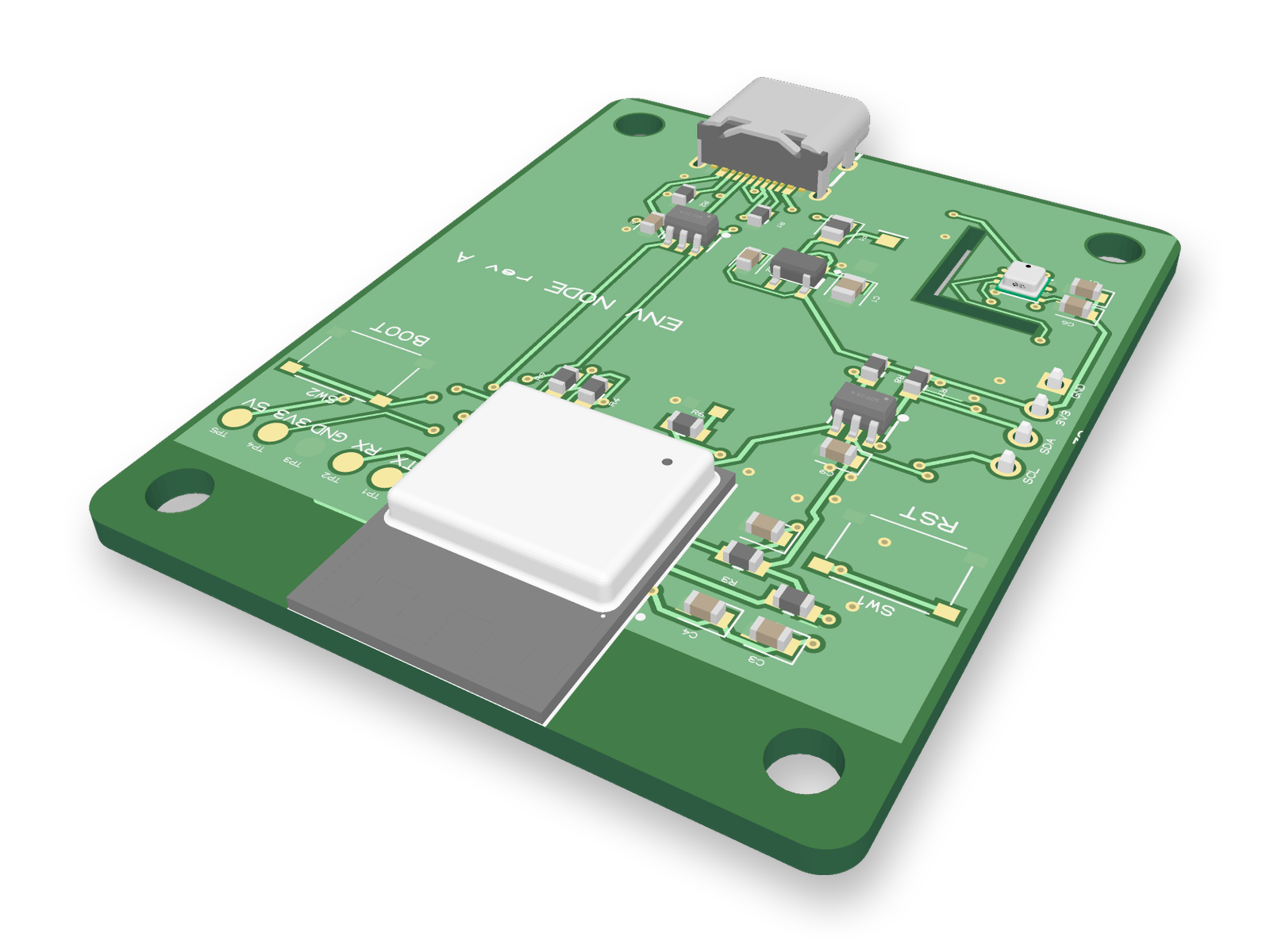
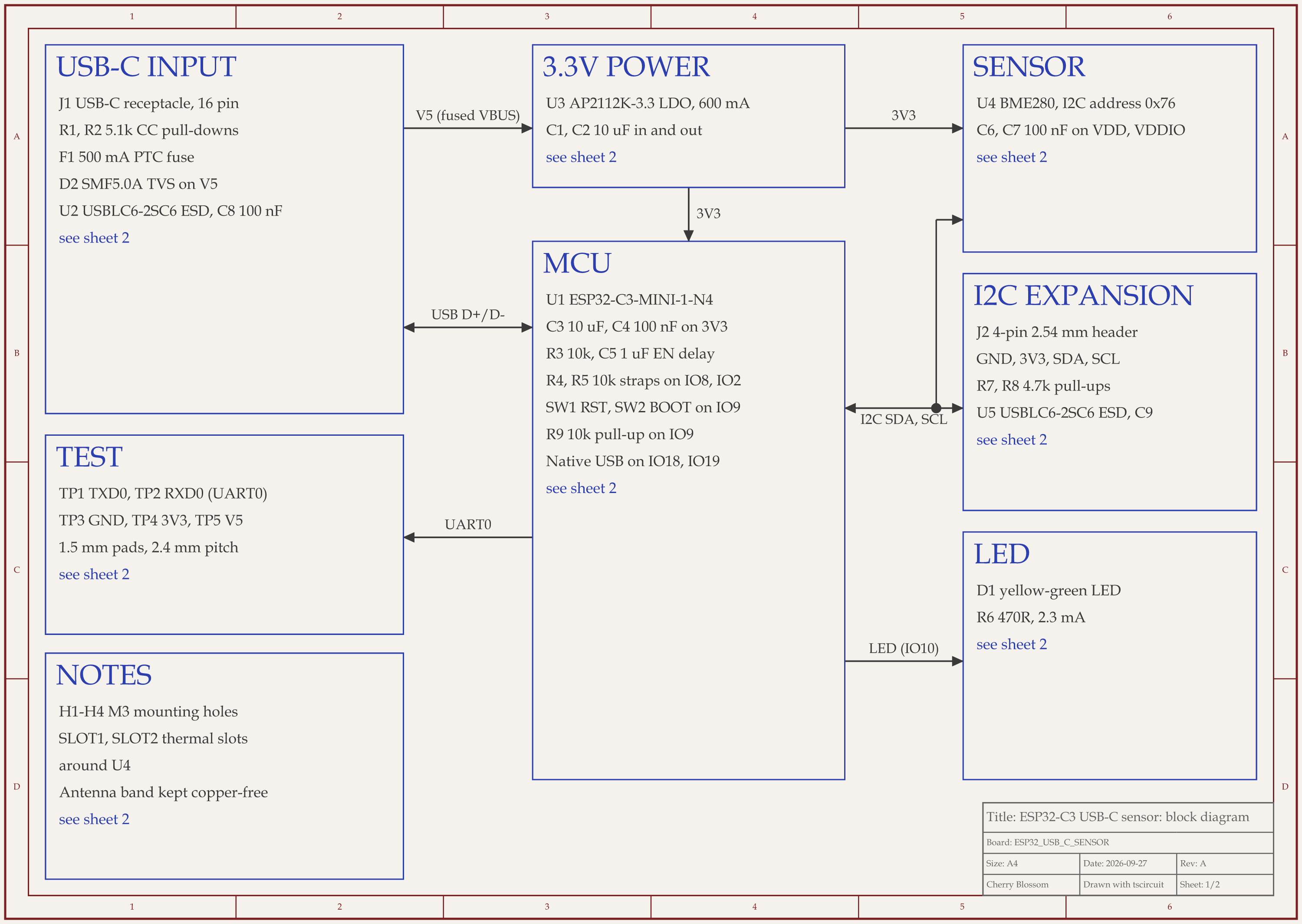
ESP32-C3 USB-C sensor node schematic, sheet 1 of 2: Block diagram
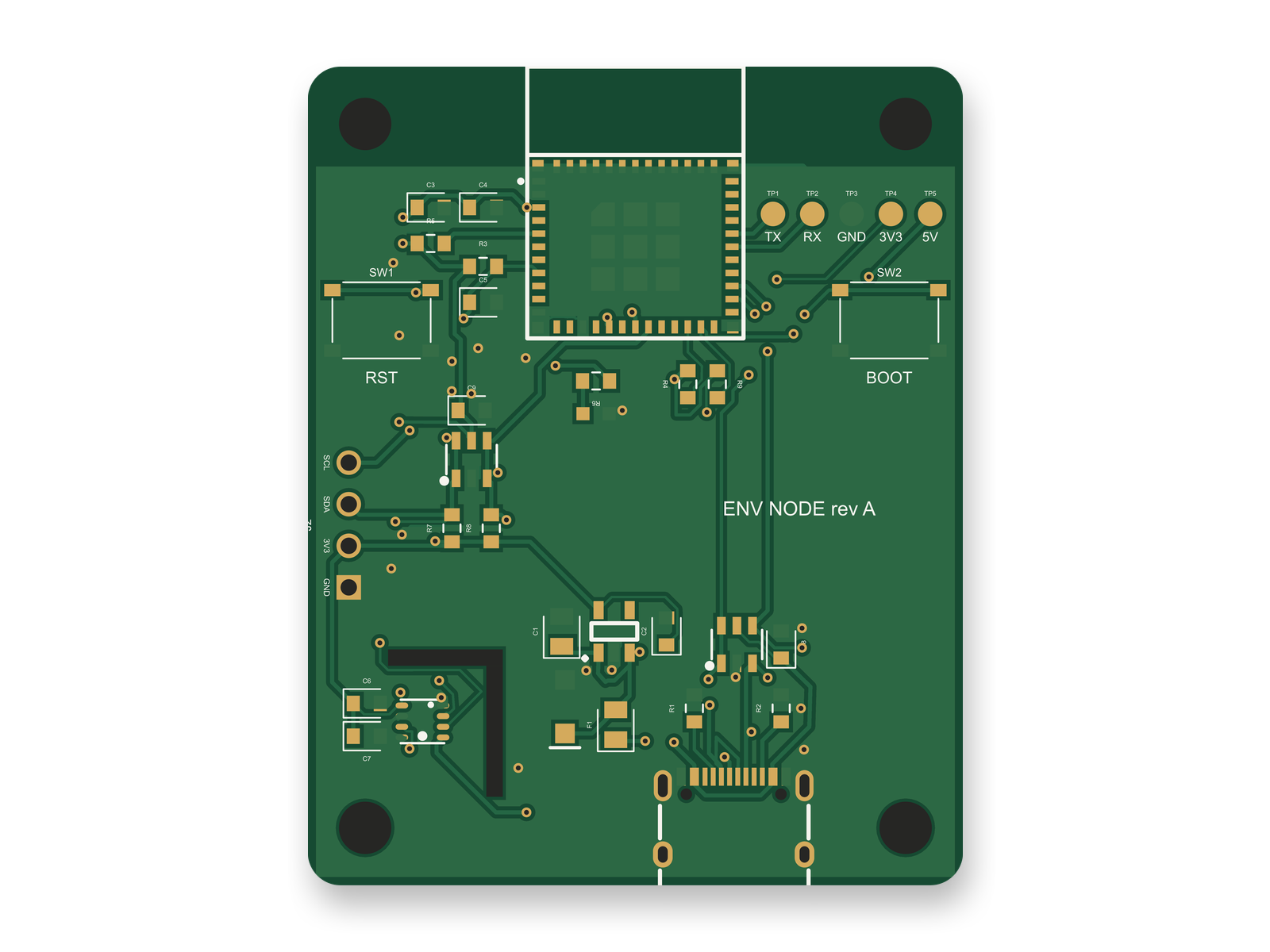
3D render of the ESP32-C3 USB-C sensor nodeRouted PCB layout of the ESP32-C3 USB-C sensor node
An ESP32-C3 sensor board with USB-C, built by an AI agent on tscircuit: block diagram, routed layout and 3D render.

Cherry Blossom runs on tscircuit, an open source engine that is free in the same sense KiCad is. To test it, we had an AI agent build this ESP32-C3 sensor board on our own machine, with the same tscircuit version and review tool Cherry Blossom's agent uses. It is 40 x 50 mm and 2 layers, with USB-C power, a BME280 sensor and an LCSC part number on every part. Two layers is also the ceiling on Fusion's personal licence and DipTrace Freeware, so this is the size of board free tiers are built for.

Every automated check passed on the final build: DRC, the netlist check, a short-circuit check and the review tool all came back with 0 errors. That does not make it ready to order, and nobody has made or tested one. An outside review of the circuit, working from the datasheets, scored an earlier version 74 out of 100 even though it had passed DRC and the review tool. It found no surge clamp on the 5 V input and no ESD protection on the I2C header. With those added, plus test points, the circuit scored 92 and the reworked layout 85. A person still has to check the USB-C and ESP32 footprints against the maker's drawings, confirm the LED and the surge diode face the right way in the assembler's preview, add ground stitching vias and run DRC again in the fab's own tool.

Worth paying for

Is Cherry Blossom free?

No. The Free plan is paused, so Cherry Blossom starts from $20 a month. It is on this list anyway, because many people searching for free PCB software mostly want a board made quickly, and for them the hours saved on learning an editor are worth the fee.

What you pay for is an AI agent that builds the board from a plain-English description: schematic, layout, 3D view, bill of materials and Gerbers, with footprints taken from real part data and a verification gate on every edit. It exports an editable KiCad project, so you can pair it with KiCad and finish by hand. It is an early beta, you change a board by asking the agent rather than dragging traces, and it is not a simulator. The pricing page has the details, and the page for makers shows how it fits a hobby project.

See it on your own board

The quickest way to judge any of this is to describe a board and read what comes back: the schematic, the layout, and what the verification gate says about it. It runs in the browser, with the AI included.

Questions

KiCad is the best free PCB design software. It is open source under GPL v3, has no limits on layers, board size or commercial use, and runs on Windows, macOS and Linux. EasyEDA's core features are free in a browser, including for commercial use, and LibrePCB and CircuitMaker are free too. Autodesk Fusion's personal licence and DipTrace Freeware rule out commercial use and cap board size. If you would rather pay than learn an editor, Cherry Blossom is the paid alternative. It starts from $20 a month and turns a plain-English description into a checked schematic, PCB layout and fab files in the browser. Footprints come from real part data, a verification gate checks every edit, and you can export Gerbers or an editable KiCad project.

Yes. KiCad, LibrePCB and Horizon EDA are open source and can be used commercially. EasyEDA's free plan allows commercial use, and CircuitMaker's site says you are free to earn revenue from your designs. Fusion for personal use and DipTrace Freeware do not allow commercial use.

Yes. KiCad is licensed under GPL v3 and its site describes it as forever free. There is no paid tier and no board-size, layer or commercial-use limit.

No. Autodesk says EAGLE is no longer available or supported as of June 7, 2026, and it points former EAGLE Free users at Fusion for personal use, which is free for non-commercial projects with limits on schematic sheets, layers and board area.

Flux's free Explore plan covers public projects after a 14-day trial; private projects, export and AI need a paid plan. Cherry Blossom's Free plan is paused at the moment, so it is paid only. Our [roundup of free AI PCB tools](/blog/free-ai-pcb-design-tools) covers the rest.

Describe a board. See what comes back.

Schematic, layout and a verification gate, in the browser. Exports to Gerbers and KiCad.